Our families
All of our exchange students attend public schools and enjoy the same rights and responsibilities as their Spanish classmates.
The host family thus gives the exchange student the opportunity to experience a foreign culture within the context of family life and to learn a foreign language or to improve their existing language skills. In everyday life, the exchange student becomes familiar with the new cultural and linguistic reality. The exchange student brings his/her own cultural and linguistic background into family life. This gives the host family the opportunity to get to know different habits and new insights. The aim is the cultural and linguistic exchange between students and families.
The exchange student is another family member and shares the same rights and obligations with the family. The host family should treat the exchange student with understanding, affection and care. Our host families have their own house rules and habits.
Support for exchange students and host families
To ensure a successful stay for both the host family and exchange students, we have certain rules and procedures. Our on-site supervisors support the host family and exchange students through regular contact throughout their entire stay. They serve as a bridge between you and offer help and advice. Students and families can also access the support of our main office in Barcelona. Our team is available 24 hours a day in English and Spanish.
Frequently asked questions about homestays
The following questions and answers are most frequently repeated:
How long do I have to wait for host family and placement information?
Because we work with people, they are all very “different”, so this question is not easy to answer. Some families decide very quickly to take in an exchange student, while others take their time. Sometimes this also depends on the region.
In larger cities, placement may take a little longer than, for example, in more rural areas. It is important to us that you know that the placement time has nothing to do with the quality of the family and that you don't have to worry at all if the host family details arrive a little later. All families are carefully selected. As a rule, we always send all information by July 30th or December 31st at the latest.
Where does InterKultur Student Exchange look for host families?
InterKultur Student Exchange is looking for host families throughout Spain where we have a local coordinator on site.
Who is looking for the host families?
Our local coordinators are responsible for finding host families and schools.
How are host families searched?
We find the families with the help of schools and teachers or through the social network of the Local coordinators. The most effective and common way is word of mouth. Before we accept the family, our local coordinators personally visit, interview and examine them.
What happens when conflicts arise?
Problems definitely occur during an exchange stay. InterKultur Student Exchange through our local coordinators attempts to ensure that everyone involved discusses such conflicts and resolves them together.
When does family change happen?
Wenn Konflikte zwischen Gastfamilien und Austauschschüler entstehen, die nicht gelöst werden können, kann es zu einem Gastfamilienwechsel kommen. Manchmal gibt es keine Gemeinsamkeiten oder die Chemie stimmt gar nicht. In solchen Situationen, und bevor die Situation eskaliert, wird ein Familienwechelse durchgeführt.
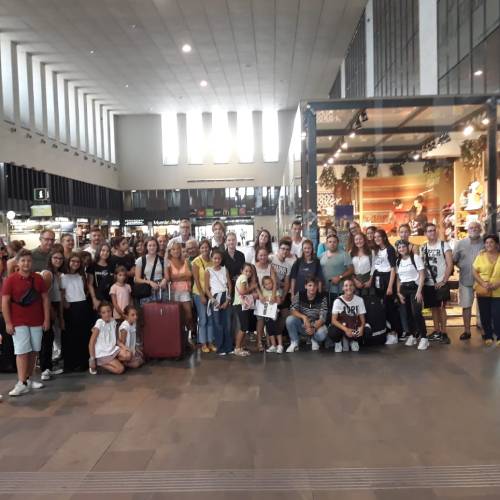
The tasks of our host families:
- Hosting an exchange student in their home with a single or double room.
- Preparation of meals that take place in the house and as part of everyday life.
- Understanding, affection and care when dealing with the exchange student.
- The host family is not obliged to pay personal expenses (telephone, cosmetics, etc.), as well as any school or transport costs.
Important decisions and compliance with the program rules are of course determined by our supervisors and the central office in Barcelona. We attach great importance to the family atmosphere in dealing with the exchange students as well as to promoting cultural and linguistic exchange.